Baiyun steps up transforming into bio-manufacturing hub
en.by.gov.cn Updated: Jun 18, 2026
Guangzhou Baiyun Bio-Manufacturing Industrial Park, specifically its Phase I project, the Blue Bay Bio-Manufacturing Industrial Park, has recently welcomed a significant number of prominent enterprises that have begun operations on its premises.
With a two-phase plan covering over 1,000 mu (66.67 hectares) and a focus on the bio-manufacturing industry, the park has rapidly emerged as a key player in South China's bio-manufacturing sector since its opening in November last year.
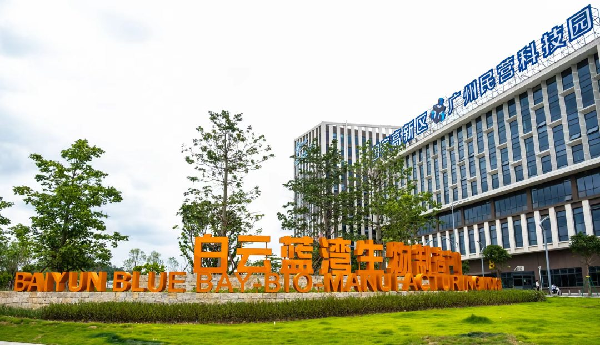
The Blue Bay Bio-Manufacturing Industrial Park in Baiyun. [Photo by Zhuang Xiaolong/Guangzhou Daily]
The Blue Bay Bio-Manufacturing Industrial Park is dedicated to incubation acceleration, providing space for research and development, testing, and light production. Currently, over 10 companies have signed agreements to move in, spanning the entire bio-manufacturing industrial chain.
Li Suisheng, chairman of Guangzhou Donglai Qibing Technology, said his enterprise specializes in producing domestic livestock equipment, and its six associated companies are gradually relocating to the Blue Bay Bio-Manufacturing Industrial Park.
The rise of the bio-manufacturing industrial park is attributed to Baiyun district's strategic planning and consistent efforts to promote high-quality development in the bio-manufacturing industry.
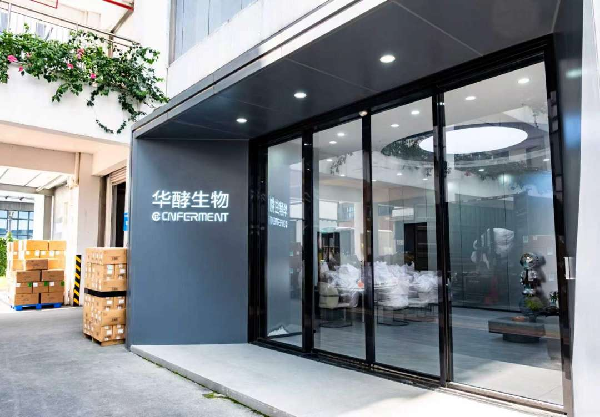
Guangzhou Huajiao Biotechnology based in Baiyun. [Photo by Zhuang Xiaolong/Guangzhou Daily]
In November last year, Baiyun district authorities released the Three-Year Action Plan for High-Quality Development of the Bio-Manufacturing Industry (2026-28), which outlines the construction of a "11221" industrial ecosystem to build an innovation center, a testing base, two technological achievements transformation platforms, two bio-manufacturing industrial parks in two phases, and a bio-manufacturing fund cluster totaling 100 billion yuan ($14.04 billion). It strives to achieve an output value exceeding 50 billion yuan by 2028, thus becoming a nationally competitive bio-manufacturing industry pilot zone.
In February, Baiyun introduced a special support policy to promote the high-quality development of the biomanufacturing industry.
Zhang Hongwei, deputy director of the Guangzhou municipal industry and information technology bureau, said that Guangzhou's various governmental departments will continue to support Baiyun in taking advantage of its industrial foundation, location as a hub, and innovative resources, implement the city's bio-manufacturing industry development policies, and facilitate the transformation of more scientific research achievements in the district.
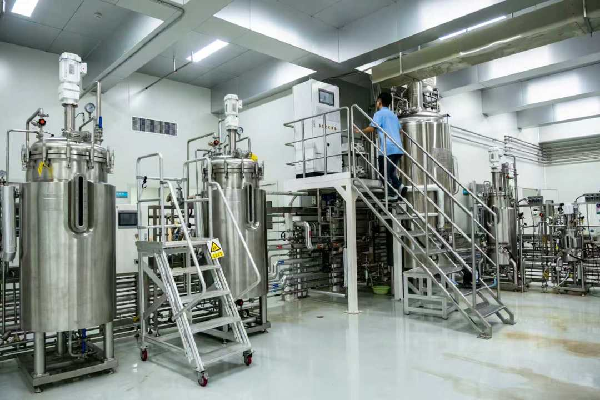
A bio workshop. [Photo by Zhuang Xiaolong/Guangzhou Daily]
Luo Xiaochun, a professor at the School of Biological Science and Engineering at South China University of Technology and general manager of Guangzhou Xiaochun Biotechnology, said Baiyun's foremost advantage, in contrast to cities that prioritize industrial biomanufacturing, is its exceptional capacity to directly integrate biotechnology with the consumer market.
Luo added that the market and the industrial chain drive the development of the bio-manufacturing industry in the district.
"From brand owners, OEM/ODM companies, raw material suppliers, packaging companies, to testing and certification agencies, e-commerce channels, and supply chain services, a high degree of agglomeration has already taken shape in Baiyun. This means that once bio-manufacturing technology is industrialized, it can quickly find application scenarios and be commercialized without undergoing a lengthy market cultivation process," he said.