New two-way investment opportunities at 26th CIFIT
swj.xm.gov.cn Updated: Sept 16, 2026
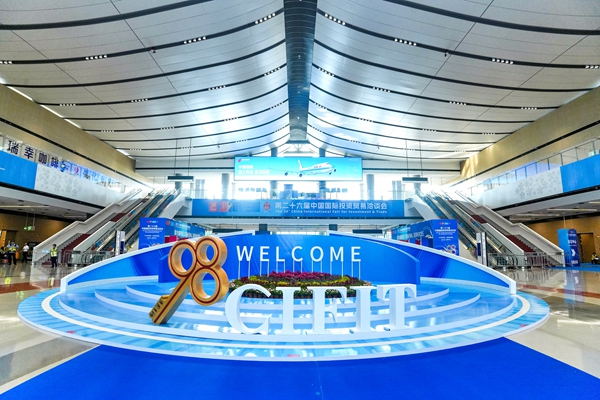
The 26th CIFIT is held in Xiamen, Fujian, from Sept 8 to 11, drawing more than 1,200 government agencies and business delegations from 129 countries and regions, as well as 30 international organizations. [Photo provided by Lin Yuyang to swj.xm.gov.cn]
The 26th China International Fair for Investment and Trade (CIFIT) was held in Xiamen, Fujian, from Sept 8 to 11, drawing more than 1,200 government agencies and business delegations from 129 countries and regions, as well as 30 international organizations.
As China's own development provides a strong counterweight to global economic uncertainty, more and more overseas businesses are turning their attention to the country.
Invest in China: Steady growth, rising quality, emerging sectors
China's Two-Way Investment Report 2026 released at CIFIT shows that in 2025, China set up 70,392 new foreign-invested enterprises, up 19.1 percent year-on-year and a record high. China ranked fourth globally and first among developing countries in FDI inflows.
At CIFIT, high-tech products such as humanoid robots, heavy-lift drones operating at 8,000 meters, and long-duration energy storage batteries drew crowds, while green energy, AI, smart manufacturing, biomedicine, and the digital economy emerged as hot new areas for investment in China.
Dedicated matchmaking events in these fields attracted government and business representatives from Finland, Italy, and other European countries.
Chinese Investment: From going abroad to going local
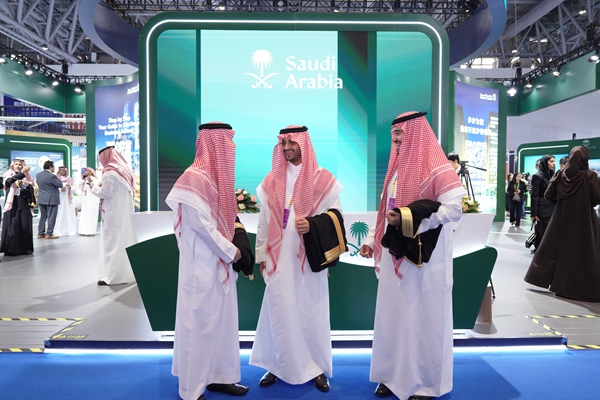
Delegates converse at the Saudi Arabia Pavilion, a country honored as a Guest Country of Honor. [Photo provided by Lin Yuyang to swj.xm.gov.cn]
Chinese investment is deepening its integration into global industrial and supply chains in new ways — moving from exporting products and brands to exporting technology and capital, and further to exporting entire industrial ecosystems.
The 2026 report notes that the technology, brands, and supply chain capabilities Chinese companies have built at home are increasingly translating into long-term international operating strength, with their globalization expanding from simple exports toward local operations and global resource coordination.
By the end of 2025, China had established 58,000 enterprises overseas across 189 countries and regions, creating an average of over 2 million jobs a year.
Better environment: Powering two-way investment
The Xiamen Shumaotong (Digital Trade) Platform launched commercial operations at the 26th CIFIT, offering foreign trade and cross-border e-commerce firms compliant e-CNY settlement services in partnership with banks and payment institutions to tackle high fees, slow transfers, and risk control challenges.
In recent years, China has continued to improve its policies to support two-way investment. A better business environment makes investing in China more reassuring, with a wider range of encouraged industries and all foreign investment restrictions in manufacturing lifted.
Meanwhile, a growing overseas service system helps Chinese companies expand abroad more smoothly, backed by a national one-stop service platform and new regulations on outbound investment.